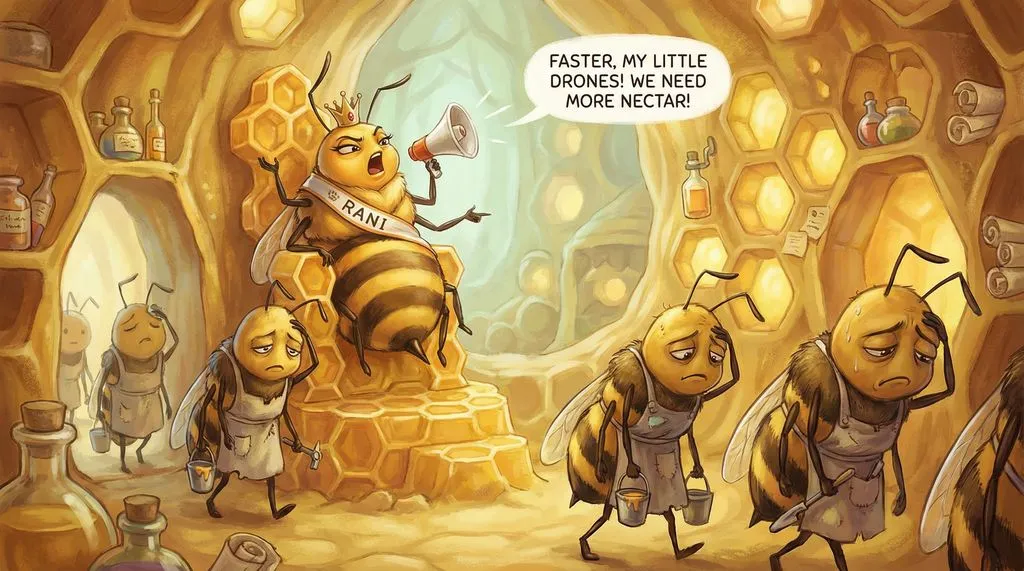
There is a basalt beehive in the Alps mountains. In this beehive, there were many, many bees, and one particular beehive was especially big—about 3 meters wide and 2 meters deep.
Every morning, the bees went out to collect nectar from flowers and brought it back to store in the honeycomb. That nectar turned into honey, which they ate in winter when they couldn’t fly. Each beehive had thousands of bees, and every bee had a small room that kept expanding over time.
Beehives are very technical and scientific. Nobody knows who taught the bees how to build them or how they organize themselves. Every beehive has a queen bee: a big, black, bossy bee in charge of all the workers.
In this particular beehive, the queen bee was named **Rani**. She was extremely bossy. Every morning at 6 o’clock, she shouted, “Get up, get up, get up!” and lazy bees would get a kick. She made timetables for collecting nectar, cleaning, security, cooking, and even doctor duties for sick bees. She monitored every bee’s work constantly.
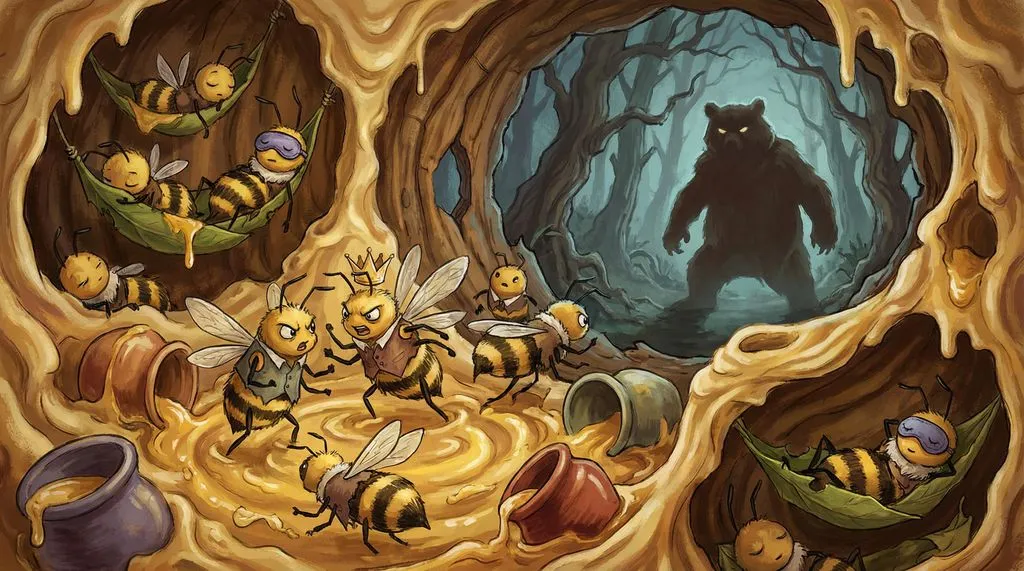
The bees hated Rani because she seemed to do nothing herself—just shouting and eating honey. Small groups of bees started conspiring to remove her. One day, they all refused to leave the hive. Rani went crazy, shouting at them to go collect nectar, but they surrounded her, chased her out, and celebrated their freedom.
With Rani gone, the bees enjoyed freedom, eating more honey than usual, and were very happy. However, without her, chaos began: nobody followed rules, nectar collection dropped, security failed, and fights broke out. They realized that even though Rani was strict, they needed a leader to organize the hive.
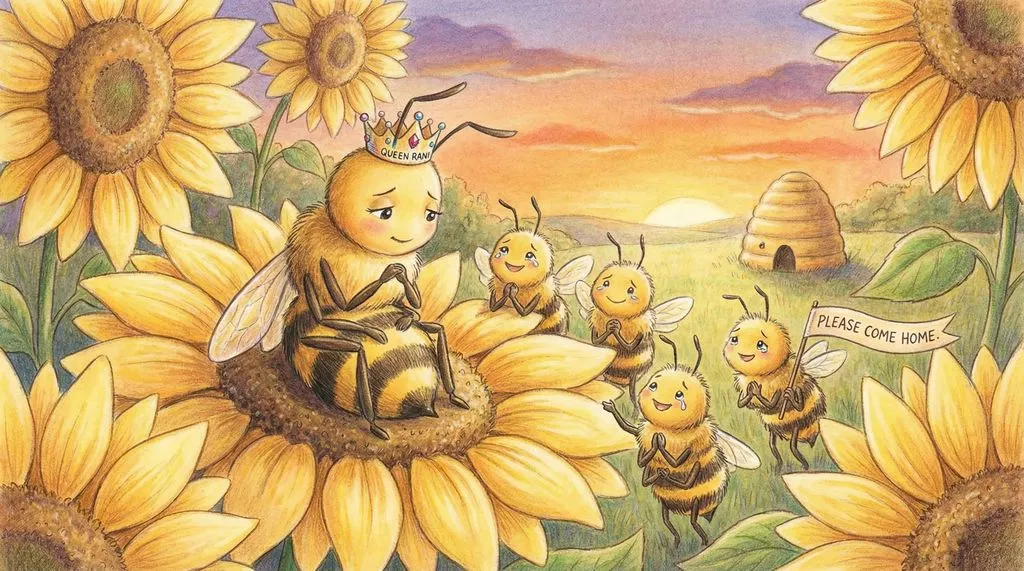
They searched for Rani, found her near a sunflower plantation, and begged her to return. Rani agreed, realizing her mistakes, and came back as a much kinder queen. She taught the bees that a hive needs leadership to prevent chaos, protect honey, and maintain order.
In the end, the bees were happy, productive, and learned the value of a responsible leader. So that’s the story.